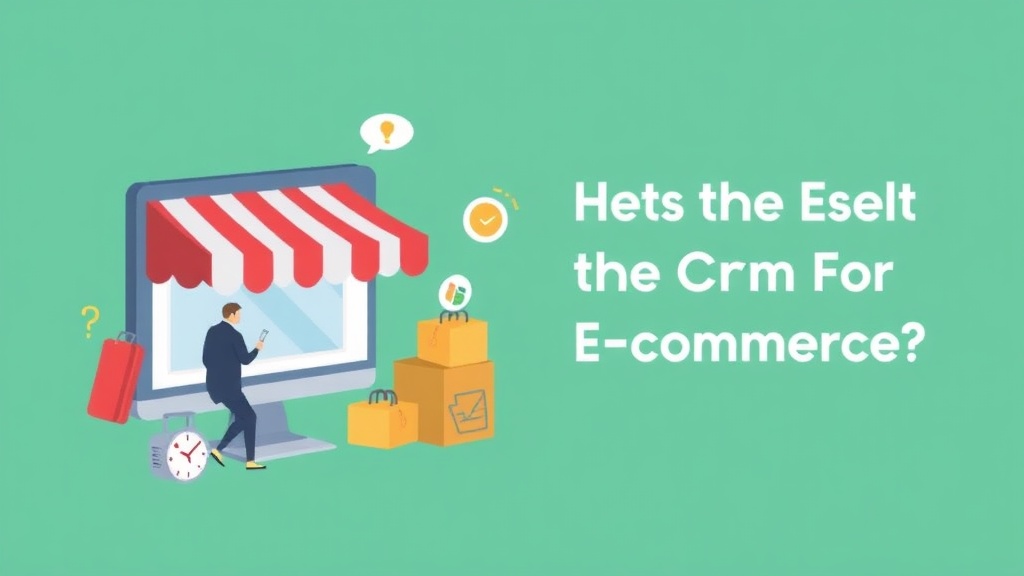

Understanding the Importance of CRM for E-commerce
In the rapidly evolving world of e-commerce, effective customer relationship management (CRM) has become crucial for businesses aiming to thrive. A well-chosen CRM system can enhance customer interactions, streamline operations, and ultimately drive sales. However, selecting the right CRM can be a daunting task due to the myriad of options available. Understanding the common challenges associated with CRM selection is essential for making an informed choice that aligns with your business needs.
1. Defining Clear Requirements
Establishing clear requirements is fundamental before diving into CRM options. Vague or overly broad specifications can lead to selecting a system that does not adequately meet your needs.
This challenge applies to businesses of all sizes, especially startups that may not have a comprehensive understanding of their customer interaction processes. Common mistakes include failing to consider specific functionalities such as integration capabilities, reporting features, and user-friendliness.
Also Read
2. Integration with Existing Systems
Integrating a new CRM with existing tools and platforms is often a significant hurdle. Businesses rely on various software for inventory management, marketing, and sales analytics. A CRM that does not seamlessly integrate can lead to data silos and operational inefficiencies.
This issue is particularly prevalent for medium to large e-commerce businesses with established systems. A common misconception is that all CRMs can easily integrate; however, compatibility can vary widely. It’s crucial to assess integration capabilities during the selection process to avoid future headaches.
3. User Adoption and Training
Even the most sophisticated CRM will fail if your team does not adopt it. User resistance is a common challenge, often stemming from inadequate training or a perceived lack of usability.
This issue is relevant for all e-commerce businesses, particularly those with larger teams. A frequent mistake is underestimating the importance of comprehensive training sessions and ongoing support, leading to low user engagement and underutilization of the system.
4. Cost vs. Value Analysis
Determining the cost-effectiveness of a CRM can be challenging, especially with various pricing models and features. Businesses often struggle to balance budget constraints with the need for robust functionalities.
This applies to small and medium enterprises (SMEs) that may be more price-sensitive. A common pitfall is focusing solely on upfront costs without considering long-term value, including potential return on investment (ROI) from improved customer relationships and streamlined processes.
5. Scalability Concerns
As e-commerce businesses grow, their CRM needs will evolve. Choosing a system that cannot scale with your business can result in the need for another switch down the line, which can be costly and disruptive.
This is particularly significant for fast-growing e-commerce brands. A frequent misconception is that any CRM will suffice for the present without considering future growth. It’s essential to evaluate whether a CRM can support increased data volume and additional functionalities over time.
6. Data Security and Compliance
Data security is paramount in e-commerce, particularly with the increasing focus on data privacy regulations like GDPR. Selecting a CRM that does not prioritize security can expose your business to risks.
This challenge is relevant to all e-commerce businesses, especially those handling sensitive customer information. A common mistake is overlooking the importance of compliance features when assessing CRM options, which can lead to severe legal and financial repercussions.
7. Customization Limits
Customization is often a critical feature for e-commerce businesses seeking to tailor their CRM to specific processes or customer interactions. However, many CRMs come with limitations that may hinder your ability to adapt the system to your unique needs.
This challenge affects businesses of all sizes, particularly those with specialized workflows. A misconception is that all CRMs offer extensive customization options, while many may have rigid structures that can limit operational flexibility. Assessing customization capabilities early on is vital for ensuring the CRM aligns with your business model.
8. Vendor Support and Reputation
The level of support provided by the CRM vendor can significantly impact your experience. A lack of responsive support can leave your team stranded during critical moments, affecting customer interactions.
This is a concern for e-commerce businesses of all sizes, especially those that may encounter technical issues. A common mistake is not thoroughly researching vendor reputation and support services, which can lead to frustration and operational downtime.
9. Evaluating User Experience
User experience (UX) is often overlooked during CRM selection. A system that is difficult to navigate can hinder productivity and lead to frustration among team members.
This challenge is relevant to businesses of all sizes, particularly those with non-technical staff. A common misconception is that a feature-rich CRM automatically equates to a better user experience. It’s important to prioritize usability and ensure that potential users are involved in the evaluation process.
10. Measuring Effectiveness Post-Implementation
Once a CRM is implemented, measuring its effectiveness is crucial for ongoing success. Many businesses struggle with defining and tracking key performance indicators (KPIs) to gauge success.
This oversight can occur in businesses of any size. A common mistake is failing to establish clear benchmarks for success, leading to uncertainty about whether the CRM is delivering the desired results. Implementing a robust evaluation strategy post-implementation is essential for maximizing the CRM’s potential.
Conclusion
Selecting the right CRM for your e-commerce business is a complex process filled with potential challenges. By understanding these common pitfalls and actively addressing them, businesses can make more informed decisions that lead to enhanced customer relationships and operational efficiency. A thoughtful approach to CRM selection not only supports current needs but also prepares your business for future growth.